Introducing Gravity’s Pharmacy Contract Modeling Agent: Transforming Pharmacy Contract Intelligence





Community pharmacies operate at the frontlines of healthcare. They dispense medications, advise patients, and anchor local care delivery. But behind the counter, a very different challenge plays out, one that determines whether a pharmacy thrives or struggles.
Across the United States, independent pharmacies and small chains depend on Pharmacy Services Administrative Organizations (PSAOs) to negotiate contracts with Pharmacy Benefit Managers (PBMs). And that job has never been more complex.
Every PBM uses different reimbursement formulas, different discount structures, and different effective rate guarantees. A contract clause like “AWP – 18%” may seem simple on paper, but even a single percentage point shift can ripple across thousands of claims and thousands of pharmacies.
The result?
Hidden underpayments. Missed opportunities. Unpredictable performance against effective rate targets.
And limited visibility into where risk truly sits.
PSAO’s at their core serve as the negotiating and administrative backbone for thousands of community pharmacies; managing PBM contracts, reimbursements, fees, and performance commitments across massive networks. But with PBM tactics growing more fragmented and financial models becoming more volatile, manual analysis can no longer keep up. AI is now essential to interpret dynamic contract terms, model financial impact instantly, and surface risk before it becomes revenue loss.
The Complexity of PSAO Contracting
For leaders new to PBM or PSAO contracting, here’s the reality:
1. PBM contracts are dense and dynamic.
They include formulas - like AWP minus X%, dispensing fees, GER (Generic Effective Rate), BER (Brand Effective Rate), performance guarantees, all which determine how much a pharmacy gets paid.
But these formulas change, often with little notice.
2. A small change in reimbursement adds up to a big impact.
A 1% shift in AWP-based reimbursement may seem minor, but across an entire PSAO network, this can mean hundreds of thousands lost in a quarter.
3. Performance is uneven across thousands of NPIs.
While the network as a whole might meet its GER/BER commitment, small pockets of underperformance at the store level can push the PSAO into risk.
4. Executives lack real-time visibility.
Leaders often can’t answer key questions:
- Which pharmacies are at risk?
- Which PBMs cause the most shortfall?
- What’s the true financial impact of a rate change?
This is where most PSAOs hit a wall and feel trapped by the usual negotiating strategies. This is exactly where Gravity steps in.
Introducing Gravity’s PSAO Contract Modeling Agent
Today, we’re launching a first-of-its-kind AI agent built specifically for PSAO contracting, PBM analysis, and effective rate performance.
Built on our healthcare-tuned AI platform, the PSAO Contract Modeling Agent connects contract terms, claims feeds, PBM rules, and pharmacy performance into one intelligent, dynamic model.
It doesn’t just show data - it interprets it, models it, and explains it back to you.
What makes this agent different?
Live contract modeling
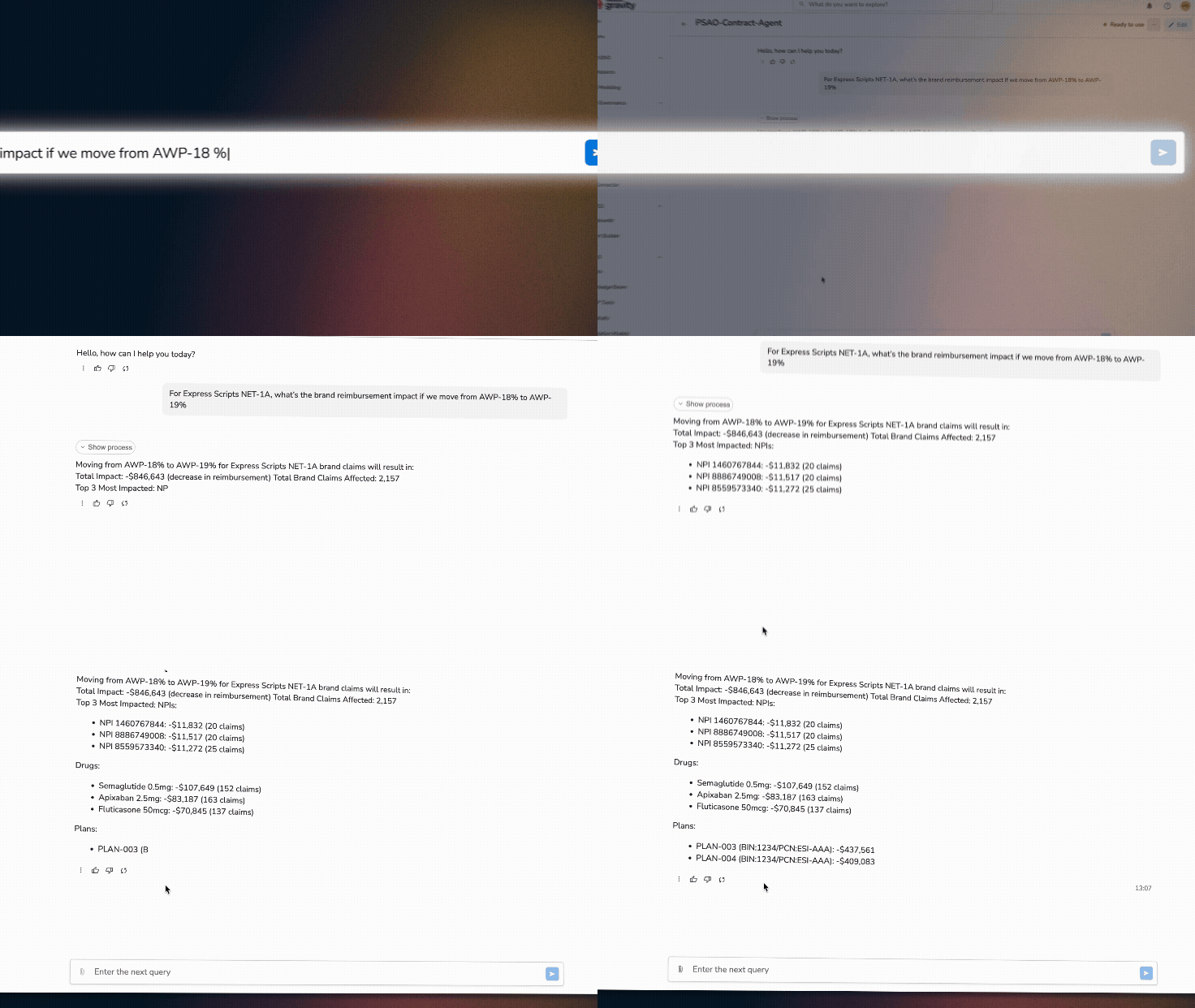
Ask:
“What’s the impact if a PBM network rate moves from AWP-18% to AWP-19%?”
The agent responds instantly with:
- Total dollar impact
- Top NPIs affected
- Top drugs affected
- BIN/PCN distribution
- Exact reimbursement math
- Claim-level breakouts
Something that normally takes analysts weeks now happens in seconds.
Real-time GER/BER performance visibility
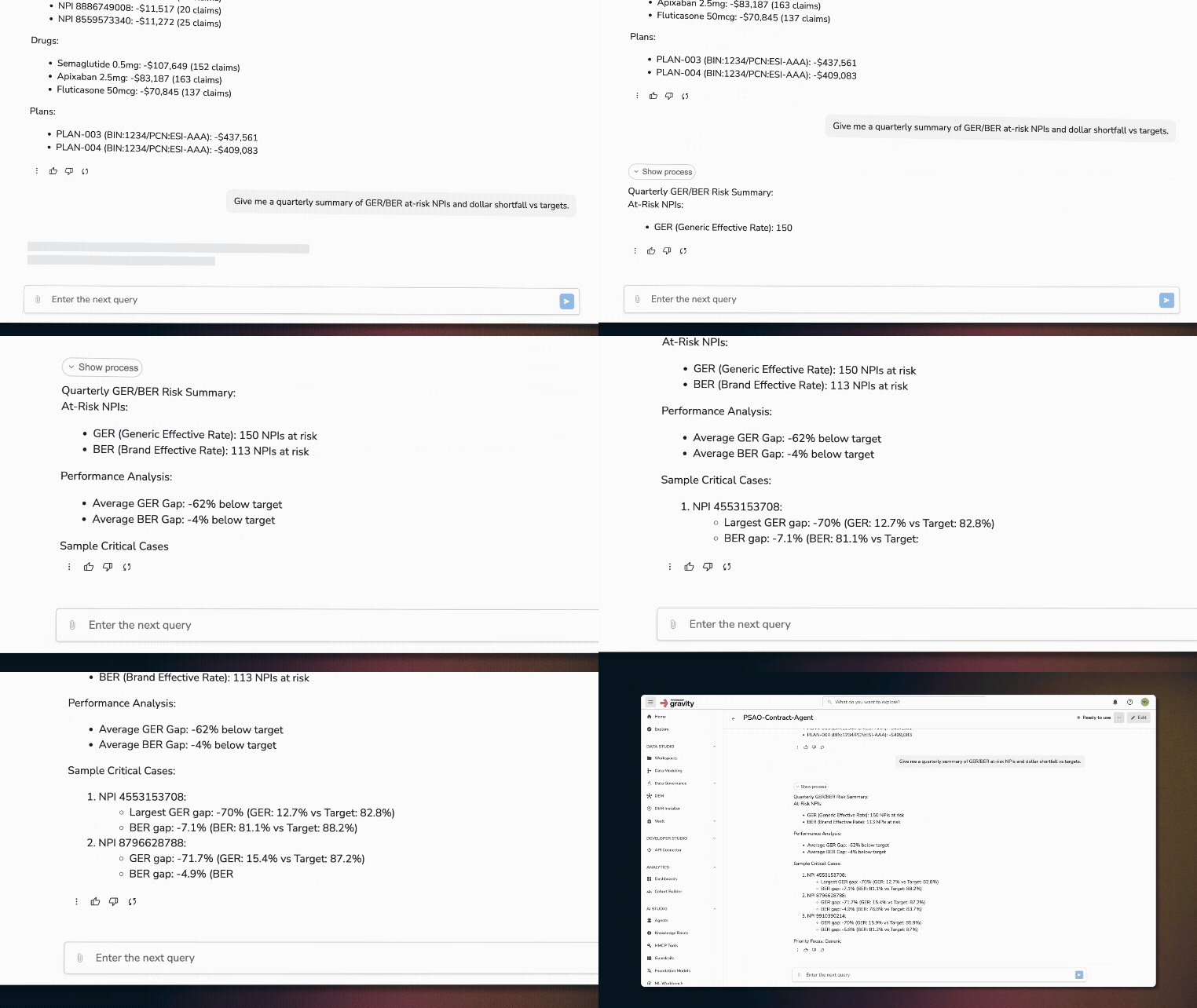
PSAO executives can ask:
“Give me a quarterly summary of GER/BER at-risk NPIs and shortfall vs target.”
The agent returns:
- Count of NPIs below GER / BER thresholds
- Dollar shortfall
- Trend lines
- The pharmacies needing immediate intervention
Then leaders can drill down:

“Which NPIs are under-paid, and by how much?”

“Which PBMs contribute the most to the shortfall?”
This turns vague intuition into clear, quantitative visibility.
Role-based insights for every persona
This agent works across the PSAO ecosystem:
- Negotiators
Model contract scenarios instantly (e.g., AWP percentage shifts). - Executives
View performance, risk exposure, and shortfall drivers at a glance. - Clinical teams
Identify where service programs (clinical services, immunizations) can offset losses. - Analysts
Drill down to individual NPIs, drugs, PBMs, or claims when needed.
Why this matters for the future of PSAOs
Pharmacy reimbursement is becoming tighter, more complex, and more volatile.
PSAOs need smarter tools. Tools that:
- Interpret contract language
- Understand claims data
- Track effective rate performance
- Connect clinical services performance and value
- Surface hidden risk
- Project financial outcomes
- Support negotiations
- And provide actionable intelligence—not just dashboards
Gravity’s PSAO Contract Modeling Agent delivers exactly that.
A New Standard for Pharmacy Contract Intelligence
What used to take days or weeks of manual analysis now takes seconds.
What used to be hidden behind thousands of rows of claims data now becomes clear.
And what used to put pharmacies at risk now becomes an opportunity to protect revenue, optimize contracts, and strengthen network performance.
This is more than an AI tool.
This is a new contract intelligence layer for pharmacy networks.
One that helps PSAOs navigate changing PBM tactics with confidence—and keep their pharmacies financially sustainable.
Ready to see it in action?
We’d be happy to give you a walkthrough of:
- Real contract modeling
- GER/BER dashboards
- PBM risk scoring
- Scenario analysis
- NPI and drug-level drill-downs
Just reach out, we’d love to show you how Gravity is transforming PSAO contract intelligence.

with the Power of Comet


.svg)
.svg)

.svg)